
Hiring in Ireland has never felt more complicated. Recruiters are dealing with an 8-week average time-to-hire, AI tools reshaping applications on both sides of the desk, and a market that refuses to settle.
For small teams without the luxury of a dedicated TA function, that pressure lands hard: every slow stage is a chance for a good candidate to disappear, and another item added to a workload no one’s given you extra time for.
We surveyed almost 1,000 recruiters and 2,000 jobseekers across two studies, our latest Hiring Trends Update (Spring 2026) and our Hiring Efficiency study from 2025. Together, they paint a clear picture of exactly where hiring processes are losing time.
Define: are your job ads asking for too much?
The instinct when writing a job ad is to ask for everything you could possibly want. The data suggests that backfires.
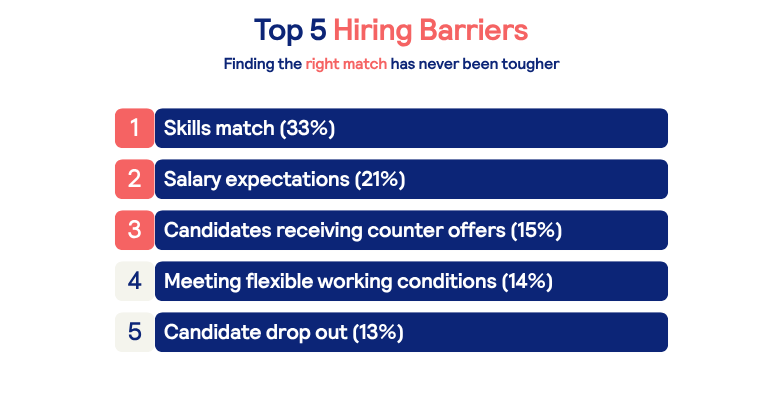
77% of candidates say job ads now ask for more skills and experience than they did three years ago. The effect isn’t a stronger applicant pool – it’s a smaller one. Strong candidates who don’t tick every box rule themselves out, while less selective candidates apply regardless, leaving recruiters with fewer options, not better ones.
The fix starts with distinguishing genuine must-haves from a wish list, while getting specific about salary, location and process upfront. It’s a quick exercise, but one most teams skip.
Source: The channel gap nobody’s talking about
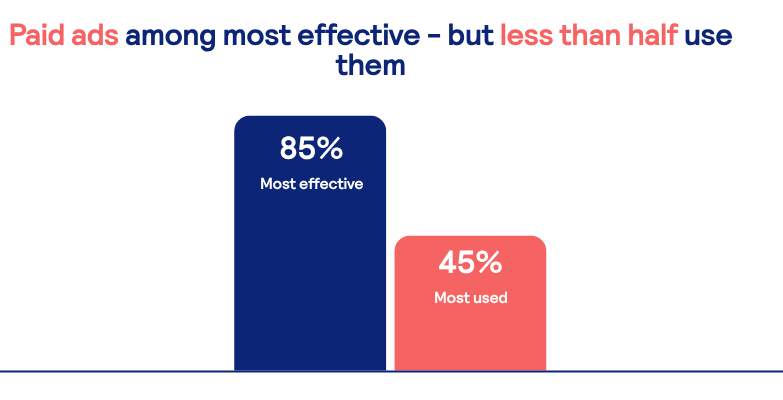
Recruiters tend to lean on the channel they know best. The data shows that’s often the channel that performs best.
Social media is the most-used sourcing channel among Irish recruiters, at 55%. But paid ads and listings are rated almost as effective (85% versus social’s 86%) despite being used by fewer than half of recruiters (45%). That’s a meaningful gap between habit and results.
The opportunity is straightforward: track which channels are actually converting for a given role before assuming your usual go-to is still the right one.
Screen: why more applications isn’t the win it sounds like
A packed inbox can feel like momentum, but rarely is.
68% of recruiters say screening irrelevant applications is what slows their work down most, and the average recruiters now spends 3.4 hours screening CVs per vacancy. More applications don’t mean more suitable candidates – they mean more noise to sort through before you find them.
21% of recruiters say AI has already improved their CV screening, a sign that the tools to fix exist, even if most teams haven’t built them into their process yet.
Interview: too many rounds, not enough progress
Interviews are where good intentions quietly become bottlenecks. Recruiters told us the biggest time-wasters are interviews that run too long (30%), unnecessary follow-up rounds (26%), no clearly defined process (23%), and too many rounds overall (22%).
More rounds rarely mean a better decision. They mean more scheduling, more coordination, and more chances for a candidate to disengage or accept another offer while they wait.
Decide & Hire: the finish line that keeps moving
Finding the right person doesn’t guarantee a fast hire. The paperwork, system updates and last-minute changes to the role can quietly add days to a process that should already be closing.
It’s telling that 73% of recruiters are already learning AI specifically to claw back time lost to this kind of admin, with the biggest early wins in writing job ads (28%) and CV screening (21%). The final stage is exactly where small process fixes tend to have an outsized effect.
Where’s your own drag, really?
Every one of these five stages, from writing the job ad to signing off the hire, can quietly leak time in its own way. The data above shows where the average Irish hiring process is losing ground, but yours might be losing it somewhere else entirely.
That’s exactly what our Faster Hiring Toolkit is for. It walks you through each stage with the fixes behind the numbers above, plus a simple way to score your own process, so you know where to focus instead of guessing.
Cut the drag, and the stress that comes with it.
About the research
This article draws on two IrishJobs studies: the Hiring Efficiency study (475 HR leaders and 824 jobseekers, fieldwork June-July 2025) and the Hiring Trends Update (502 recruiters and 987 candidates, fieldwork Spring 2026), both conducted independently online via Centiment. Candidate samples are representative of Ireland’s workforce by age and gender. Because the two studies used different questions and timeframes, figures are presented separately, and direct comparisons should be made with care.
A faster process starts with the right partner
Reducing friction across your hiring process isn’t just about internal fixes, the right tools matter too. IrishJobs’ All Jobs solution and smart matching technology are built to help SME hiring teams cut the admin and focus on the people who matter.