
The latest edition of the IrishJobs Hiring Trends Update explores the trends around skills in the current hiring landscape in Ireland. Specifically, the findings examine the challenges, opportunities, and growing importance of identifying and developing the skills that matter most for the future workforce.
Based on a survey of 500 HR leaders and 1,000 candidates across Ireland, we’ve uncovered crucial insights to help employers and recruiters futureproof their 2026 hiring strategies and stay competitive in a fast-evolving labour market.
Top skills-based hiring takeaways
- 69% of recruiters say finding candidates with the right skills is a challenge.
- Skills-based hiring is the top priority for businesses (73%) in 2026.
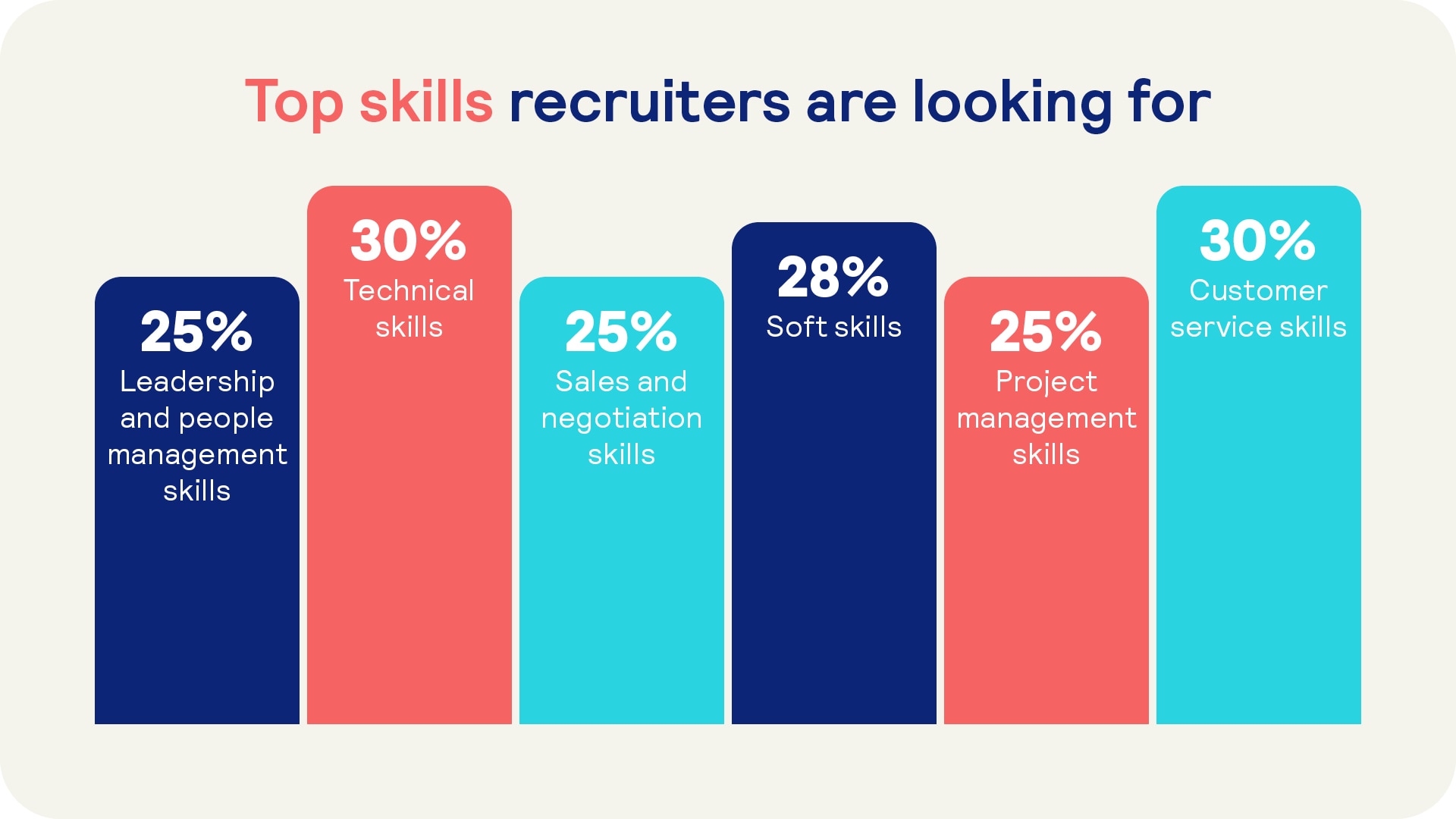
- Soft skills such as problem-solving, collaboration, and communication are on top of recruiters’ list when it comes to skills (29%).
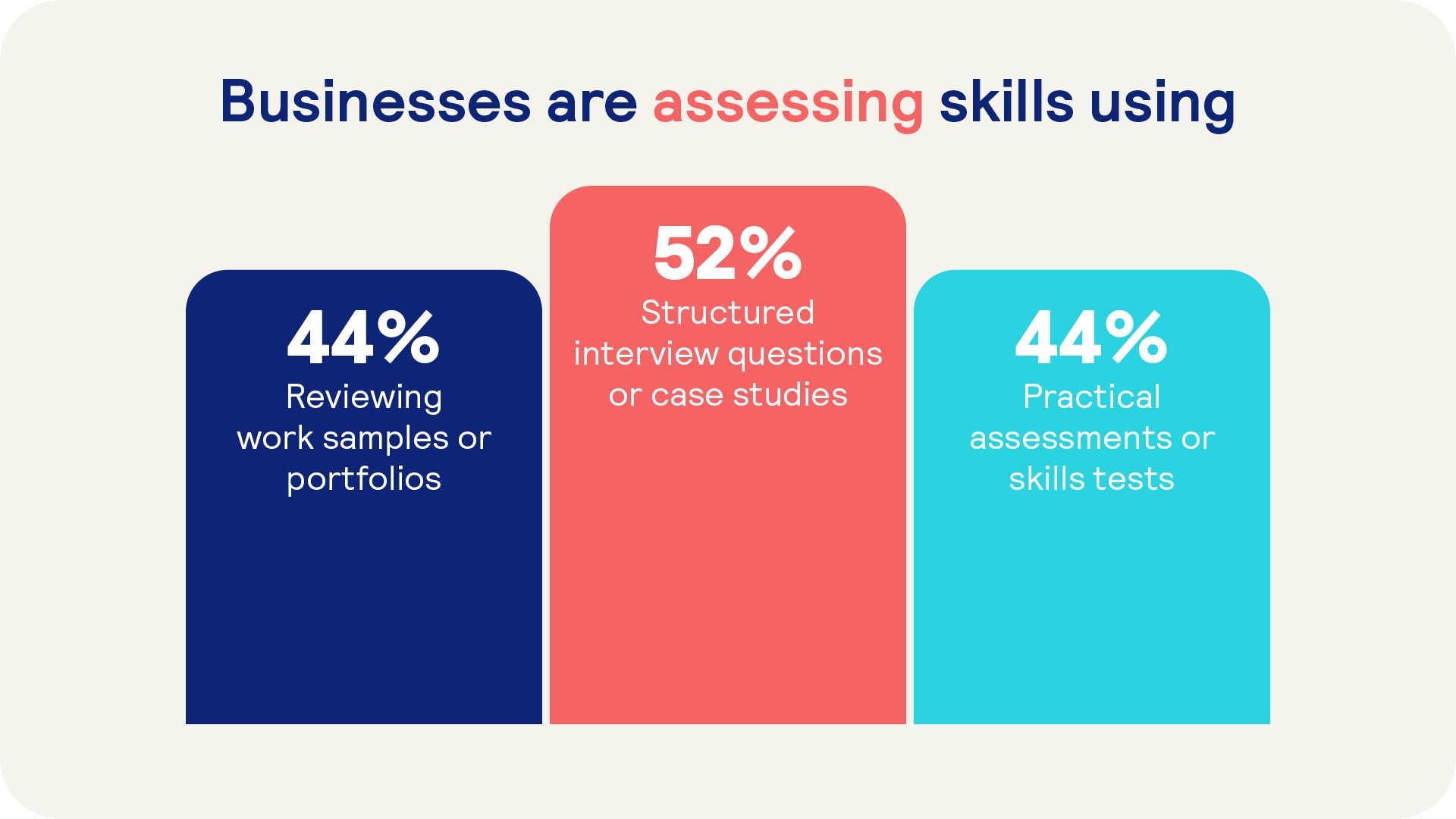
- 44% of businesses use skills assessments to ensure candidates possess the required skills.
The shift towards skills-based hiring
Our research shows that demand for talent is clustering around specific sectors and capabilities, with recruiters prioritising:
- Technical skills (30%)
- Customer service and customer centricity (30%)
- Soft skills (28%)
- Sales and negotiation skills (25%)
As a result, many organisation are rethinking their approach to recruitment, with 33% now making skills-based hiring a strategic priority. This approach shifts the focus away from traditional markers such as:
- Previous job titles
- Formal qualifications
- Years of experience
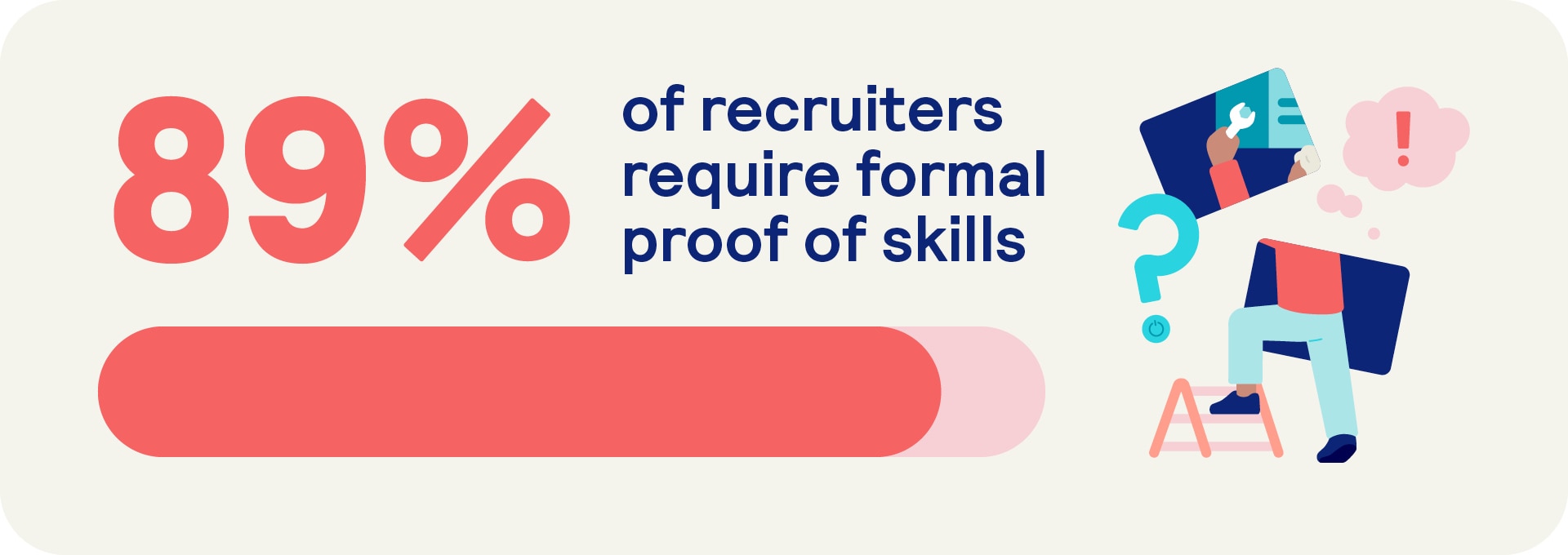
Instead, skills-based hiring evaluates candidates on the actual competencies and capabilities they bring to the table. This shift is reflected in over half (55%) of businesses requiring formal proof of skills, whereas 34% require it depending on the role. Moreover, 44% of businesses have implemented structured skills assessments as part of their recruitment process.
The benefits of a skills-based approach
There are significant advantages that come with this shift towards skills-based hiring. From an employer’s perspective, the two clear benefits are:
- Addressing skills shortages: By targeting specific skills gaps within their organisations, employers can sharpen their hiring focus. For instance, companies in tech, healthcare, and logistics can look to map required skills to business outcomes, enabling more agile workforce planning as a result.
- Promoting inclusive hiring: Skills-based recruitment prioritises ability over background, helping to reduce unconscious bias and promote diversity. When employers assess candidates on what they can do rather than where they studied or previously worked, they open the door to underrepresented talent pools and strengthen workforce inclusivity.
The candidate’s perspective on skills
Our research uncovered that 12% of workers are unsatisfied with how they are applying their skills in their current role.
The top reasons workers gave for not being satisfied with how their skills are applied in the workplace include:
- No opportunities for professional development or training (30%)
- Being misused with more opportunities to do work in another area (26%)
- No opportunity to work on interesting or innovative (24%)
- The work environment is not conducive to creative work (23%)
These findings show that employees are eager to learn, grow, and apply their skills more effectively. Providing clear pathways for professional development, upskilling, and internal mobility can significantly boost engagement and retention.
Moreover, this highlights the importance of effective skills-based hiring. When candidates are placed in roles that fully utilise their abilities, they are more likely to be productive, motivated, and loyal, reducing turnover and improving performance.
Getting started with skills-based hiring
With the importance of this hiring model clear, employers need to act swiftly to integrate skills-based practices into their recruitment processes.
Let’s take a look at some of the key steps to getting started:
Redesigning job descriptions
Job adverts and descriptions are central to any hiring process, and even more so in a skills-based model.
Traditional listings tend to emphasise qualifications or years of experience. A skills-based description, however, focuses instead on the competencies and outcomes required for success in a given role.
Top tip: Review all open roles to ensure job descriptions highlight the core skills, behavioural attributes, and measurable outcomes expected. Include examples of what success looks like in the role.
Implement structured assessments
When hiring for skills, organisations need a clear framework to measure and validate candidates’ abilities. Without it, it’s difficult to gauge whether applicants truly possess the competencies required.
Effective assessment methods include:
- Practical or situational tests that mirror real-world job tasks
- Work samples or portfolios showcasing previous achievements
- Competency-based interview questions tailored to key skills
- Digital skills platforms or gamified testing tools that evaluate proficiency objectively
Top tip: Combine multiple assessment methods to get a more rounded view of each candidate’s abilities. For example, pair a practical task with a structured interview to measure both technical expertise and problem-solving. This blended strategy improves accuracy and reduces bias in hiring decisions.
Ensuring hiring team alignment
A successful transition to skills-based hiring requires alignment and confidence across hiring teams. Without this, processes are likely to be fragmented, creating barriers to adoption.
As a result, it’s vital that recruiters, managers, and talent acquisition professionals are given the training they need to carry out skills-based hiring practices. This includes, for example, being able to evaluate talent objectively and interpret assessment data consistently.
Pro tip: Provide training workshops or skills calibration sessions to help hiring teams understand how to assess and score candidates effectively. Encourage collaboration between HR, line managers, and department heads to maintain consistency across roles.
About the research
The Hiring Trends Update is a bi-annual piece of research that checks the current pulse of the recruitment market. We surveyed 500 HR professionals and 1,000 candidates across Ireland between 5th and 12th September. All responses were collected online, and the candidate survey is representative of the Irish population by gender and age.
Make the switch to skills-based hiring today with our free guide.